Why the government is wrong in the gray area of landfill management
Digitalization of funeral services in Russia: an approach that no one asked for, and a regulator that no one found. Where does corruption exist, how to become a «model» contractor and is there any positive experience. How did it happen that before you write an application at State Services, you already have to go through the entire service with your feet. Let’s figure out why the «vision» of reforms does not cure the «gray zone».
The second approach to the projectile, or how the tracks ran into each other
The practice of implementing the standard service «Burial Management» (which is also called the standard industry platform and the life situation «Loss of a loved one») is gradually collecting feedback. Most government bodies and municipal departments express satisfaction with the service, assessing it as sufficient and effective. However, some pilot participants chose to hide their feedback.
Representatives of the funeral business, experts and developers of digital solutions generally support the idea of digitalization, but take a cautious position, adjusted for reality.
At a meeting with the regions, where the Ministry of Digital Development and its contractors presented a standard solution for implementation, questions arose. One of the first concerned a similar project of the Ministry of Construction, for which the regions were already downloading cemetery directories. It turned out that data from the directory of the Ministry of Construction and the portal of public services (PGS) of the Ministry of Digital Development differ in attributes by 60%. The listeners were not calmed down and dared to clarify whether there was interaction with the Ministry of Construction on the issue of matching attributes. However, the topic was neatly curtailed after the speakers announced that «colleagues were unable to update the data on GosTech, and this work had to be doubled; the tracks collided with each other.»
After the information about the «traffic» tracks, the meeting participants embarrassedly noted that when accessing the service on the portal, the applicant should already know the organization with which he intends to enter into an agreement and select it from the drop-down list. And if this is the case, then the ritual organization should be selected in a classic, non-electronic way, before the application for the EPGU is generated, and by the time the user arrives on the digital platform, the user already has an agreement, a cemetery has been determined and a location has been selected. What remains for the remote process — the application and information about burial in electronic form? The speakers heard the question and promised to work on it.
The introduction to the presentation promised the prospect of moving funeral services out of the gray area. But practitioners were unable to detect signs of whitewashing of the industry in the services offered, much less tools to combat corruption. In this part, even traditionally loyal municipalities refrained from providing examples of successful opposition to bribery.
г. Калуга, статистика обработки заявлений на захоронение

За 2025 год было подано 3172 заявления на услуги по захоронению. Из них через ЕПГУ подано 198.

За первый квартал 2026 года поступило 1013 обращений, 84 из них — через ЕПГУ.
Andrey Statov, founder of the Unified Environment service, is convinced that imposing a unified management model according to the federal scenario deprives municipalities of the opportunity to influence the situation. In his opinion, if they are left in the role of observers, the fight against corruption will be ineffective. Statov insists that increasing transparency and whitewashing the market must start at the local level. «Corruption can already manifest itself at the level of an ambulance dispatcher, when relatives are offered paid services even before doctors arrive. The system takes advantage of a person’s vulnerability at the moment of emotional instability, offering inflated prices. Digitalization alone cannot solve this problem,» explains the expert.
Ivan Golunov, editor-in-chief of the telegram channel «Funeral Trust», does not see a real solution to the problem of the «gray market» in the proposed system. «At this stage, this service does not in any way solve the problem of the gray market and the situation with the sale of places,» he is categorical. «The system formally offers to choose a burial place, but in reality the user can only choose a cemetery. This, frankly speaking, is not at all about choice, because in populated areas, as a rule, only one cemetery is open for new burials.»
Vladimir Ksenofontov, chairman of the federal commission for funeral services «Opora Rossii» agrees with these conclusions. «Information is sold. In some places, cemeteries are managed by municipalities or specialized services under the administration. In other places they are controlled, let’s say, by various groups, and sometimes by no one. This is the main problem,» he says.
Ilya Boltunov, head of the Zhuravli funeral home in Kaluga, believes that the whitening of the market will not happen on its own due to new services. According to him, unscrupulous companies actively use leaks on a huge scale, and everyone knows about it. Despite the long-standing problem, no effective measures are being taken. «There is no point in reforming and creating services if shadow services exist in parallel. First, we need to establish general order globally,» Boltunov emphasized.
Regarding the pilot project in Kaluga, as a direct participant in the market, he noted that the city had heard about it, but had not seen any real action.
He also pointed out the absence in Russian legislation of a mechanism for choosing a burial place, with the exception of family burial grounds. «I have not seen any existing electronic services to evaluate them. It seems that this is only a conditional transformation: some actions can be performed through State Services, but for the final result you still have to visit authorities to verify documents and select a burial place. We have noticed the emergence of electronic medical death certificates, but this is only a registration of the fact of death, and not the allocation of a burial place,» the expert concluded.
The standard for a typical industry solution for organizing burials, in addition to the usual state registers, administrative processes and document flow, includes services that are not typical for government authorities. We are talking about replacing burial structures and caring for graves.
Anna Taruntaeva, a specialist in the improvement department of the Kaluga City Management Department, notes the difficulty of implementing such functionality. The reason is that these services are not included in the list of standard state and municipal services approved by Order of the Government of the Russian Federation dated September 18, 2019 No. 2113. Consequently, the corresponding powers do not relate to municipal services and do not require the development of administrative regulations. Excess of authority in this case can lead to a significant violation of the rights and legitimate interests of citizens or organizations.
Andrey Statov, on the contrary, is skeptical about the idea of transferring B2C areas, such as caring for burial structures, to the state. In his opinion, this will inevitably lead to a decrease in the quality of services, an increase in their cost, and will also break the funeral services industry. «I would like to hope that the state will come to its senses and not interfere in this area,» he expressed the general opinion.
Another ambitious task, perhaps as a sign of worship of the platform economy, was the announcement of the creation of a marketplace for funeral services in the country. Despite the absence of traces and descriptions of it, the Tyumen region, responding to a request from ComNews, reported that such a marketplace had been created in the region, indicating the following: «a transparent mechanism for selecting ritual performers has appeared — a digital marketplace with open prices.»
Andrei Statov also expressed bewilderment at the creation of a trading platform under state control: «The government services portal is not intended for a marketplace, it is not suitable for this. Our My Roots project, on the contrary, is aimed at creating a comprehensive solution for caring for burial sites. People can receive the services themselves now, using existing platforms.»
Ilya Boltunov, the head of a funeral home, shares the opinion that the state is unlikely to be able to successfully create marketplaces, since it understands nothing about this business. «Transparency of tariffs is regulated by current legislation on the protection of consumer rights. Any company is obliged to provide a price list of its services upon request. The issue is not the tariffs of the companies, but rather the infrastructure services at cemeteries,» Boltunov emphasized.
Svetlana Yurkevich, director of development of the platform for the ritual industry of UNAR, is convinced that services on the EPGU will be able to cover only basic scenarios: submitting applications, obtaining information, working with reference books and government services. But the digitalization of the industry is broader and will require a larger list of measures.
Key directions of digitalization according to Andrey Statov:
Digitization of burial procedures.
Digitization of burial structures.
Create virtual memory.
What services will change the funeral industry
wp:paragraph {«placeholder»:»Content…»}
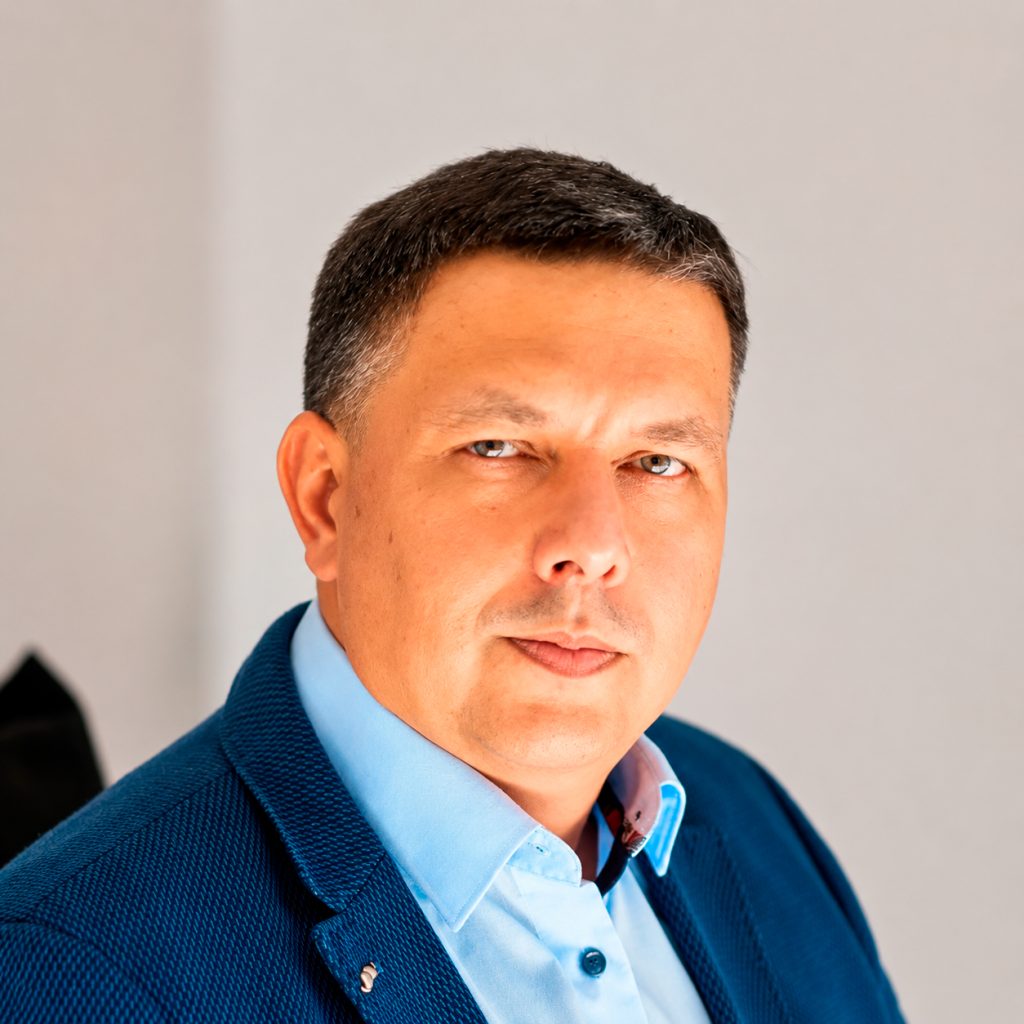
Corruption in the funeral business begins not at the cemetery, but with the ambulance dispatcher. Why the federal platform from the Ministry of Digital Development and Rostelecom should not replace municipal systems. About the failures of pilots, failed initiatives and how private IT solutions can help municipalities without breaking the industry. These and other questions are answered by Andrey Statov, founder of the «Unified Environment» service, which helps municipalities restore order in the funeral industry, and citizens search for the burial places of their ancestors.
Andrey Statov founder of the «Unified Environment» service
Headless Horseman — an industry without a regulator
Trying to figure out who runs the funeral industry in Russia and who «will be responsible» is doomed to disappointment. There is no federal structure responsible for this area in both legislation and regulations.
In July 2025, at a meeting of the relevant subcommittee led by Deputy Prime Minister Dmitry Grigorenko, priority «life situations» were identified. Then Grigorenko’s office announced that 35 new services would appear on the State Services portal within a year.
This initiative continues work that began in 2024 to create so-called industry standard solutions. They initially grew out of the concept of a platform economy. However, over time, the design of industry platforms has transformed. Today in Russia there is not a single document that would formalize the concept of standard industry platforms, their meaning and functionality. Instead, standard industry solutions and their standards appeared, which narrowed the initial understanding of the platform. The next stage of «cutting off all the unnecessary stuff» will be the implementation itself, when the final services will be presented under the term «life situations» (previously called super services).
In 2024, the Ministry of Digital Development of the Russian Federation announced the development of standard industry solutions. The burial management platform was declared as the most ready for distribution and has already been successfully tested solution, which has demonstrated its effectiveness in the Kaluga region. The product developed by the Kaluga company «Unified Operator» was chosen as an exemplary product for replication on the Gostekh platform. It was planned that scaling of this solution to other regions of the country would begin in 2025.
At the forums held in Kaluga and Kazan in 2024, platforms and systems were presented that were intended for free transfer to all interested regional authorities. The purpose of this initiative was to implement Presidential Decree No. 309 of 05/07/2024 «On the national development goals of the Russian Federation for the period until 2030 and for the future until 2036.» The authors of the reform relied on subparagraphs «a» and «g» of paragraph 8 of the Decree, which set the goal of achieving «digital maturity» of state and municipal government and key sectors of the economy by 2030. This implies automation of most transactions through unified industry digital platforms and a transition to data-driven management, including the active implementation of data processing technologies, machine learning and artificial intelligence. On a grand scale, but to what extent is the development of the industry and its «digital maturity» in the political economic sense limited to state and municipal governance? And where is the term «economic entities», which appeared at the dawn of Russia’s acquisition of a new Constitution in the early 1990s?
Further, subparagraph «g» — traditional for Russia since the time of the Concept of e-government of May 6, 2008 — provides for an increase by 2030 to 99 percent of the share of mass socially significant state and municipal services provided in electronic form. In the fifth circle, we are transferring all services to electronic form, but for now only socially significant ones. This paragraph is more specific: we are talking directly about state and municipal services, which noticeably narrows the scope of paragraph «a» and reduces it to establishing order in the processes of public authority.
The process of accompanying the loss of a loved one was decided to be «brought to light» back in 2019. Then the ideologists proposed the branding «creation of super services» for this task.
In July 2019 talk started about the super service «Loss of a loved one». It was supposed to combine online services: registering a death, receiving compensation using bank details, organizing a funeral (with a choice of the type of burial and funeral agency), as well as making an appointment with a notary on inheritance issues.
Omnichannel, proactiveness, complexity and seamless process — these principles were already used in meetings exactly seven years ago.
In August 2019, Deputy Prime Minister Maxim Akimov and Deputy Minister of Digital Development, Communications and Mass Communications Maxim Parshin presented a prototype of the «Loss of a Loved One» super service. The media then reported about its functionality: the service is designed to minimize visits to government agencies and eliminate the need to collect certificates and visit the registry office to register death. All procedures, including obtaining an electronic death certificate, will be available online. If necessary, the document can be ordered for delivery abroad.
That is, the result that we see now took seven years to develop.
The superservice was also supposed to make it easier to apply for social benefits for funerals and receive payments from the life insurance of the deceased. Users were promised a choice of trusted funeral agencies and familiarization with burial procedures. In addition, the service will allow you to make an appointment with a notary online to register an inheritance and receive payments to a bank card. To do this, it will be enough to enter your account details in your personal account, bypassing the collection of paper documents. Dreams and reveries.
In 2020, after elections and changes in teams, the disgruntled Kommersant publication reported that the introduction of a super service is slipping, and not least because of disagreements between the Ministry of Construction and the Ministry of Digital Development. The Ministry of Digital Development insisted on transferring powers to the Ministry of Construction of the Russian Federation, but the latter objected, citing the lack of relevant competencies. The situation could have been resolved by a new bill on the funeral business, but it was never adopted. The bill was opposed by funeral directors in the capital, known for their reluctance to accept federal standards. Moscow, as a rule, does not implement standard federal decisions, and the «Loss of a Loved One» project was no exception. The State Budgetary Institution «Ritual» of Moscow, to which the editors contacted, did not provide comments.
Despite this, the Ministry of Telecom and Mass Communications announced a new launch date for the super service — 2021. TASS confirmed this information, citing Deputy Prime Minister Dmitry Chernyshenko.
After 2021, 2025 immediately arrived. There are again updates in power, super services are a thing of history, and «life situations» are at the top. We returned to the provision of public services based on the life situation principle, which was dreamed of back in the Ministry of Economic Development in 2008–2009.
Retrospective of the cycle of life situations
2014: A life situation is a set (complex) of state and municipal services, united according to the principle of an event in the life of a citizen (the birth of a child, moving, loss of a job, etc.).
2019: Superservice is a new format for the provision of public services, designed to minimize the need for personal visits to various government agencies and reduce the number of paper documents.
2025: Life situations are a new stage in the evolution of public services. The transition from a «well» departmental approach to an approach based on a request to solve a specific problem of a citizen, and the exchange of data between government agencies occurs in the background.
«Rossiyskaya Gazeta» writes in 2025, that «life situation» services are a new (it’s interesting that RG calls this stage new) stage in the evolution of public services: the transition from a «well» departmental approach to the process of data exchange between government agencies in the background for the citizen.
But in the case of funeral activities, even the «well» approach by that time had long since been implemented by anyone for the reasons described above. The industry was left without a regulator.
The Ministry of Digital Development of the Russian Federation is responsible for the digitalization of funeral activities — through the very industry platforms provided for by presidential decree.
Siberians are not afraid of competition with state funeral services
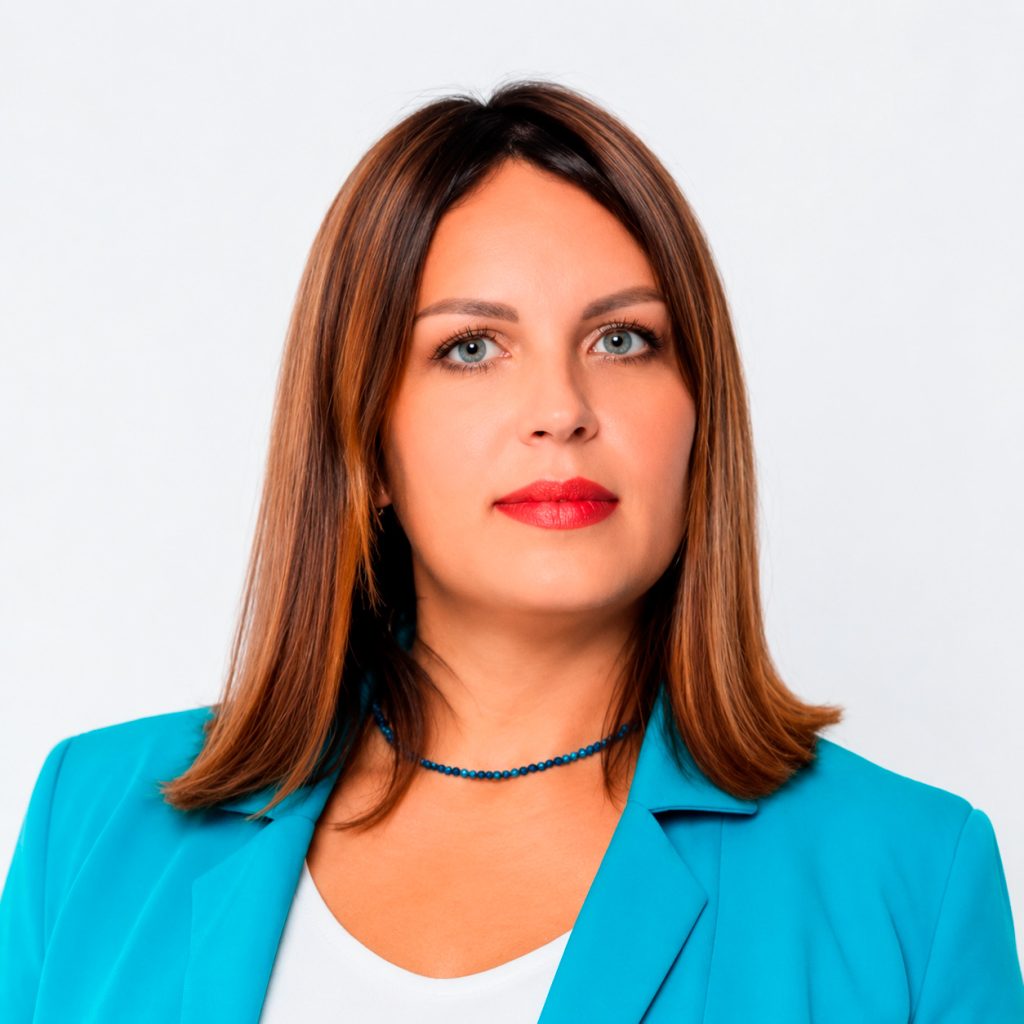
The industry needs a digital governance standard, not just an accounting standard, to make the case for reform. Electronic document management and registers are not enough, planning for the development of cemetery infrastructure is not enough, says Svetlana Yurkevich, development director of the Kuzbass platform for the ritual industry UNAR.
Svetlana Yurkevich, director of platform development for the ritual industry from Siberia UNAR
The emergence of the life situation «Loss» and the onslaught of the Ministry of Digital Development
At the end of 2024, the Ministry of Digital Development (Mindigits) was actively discussing the launch in 2025 of a number of projects covering various industries. The main idea is to create standard systems on the GosTech platform designed to provide public services and automate management functions in the constituent entities of the Russian Federation. The implementation of these projects will be carried out centrally: a single executive will select a commercial company for each industry, whose decision will then be replicated for the regions.
According to the presentation of Deputy Minister of Digital Development Oleg Kachanov, by March 1, 2026, standards and benchmarks must be approved for the implementation of a standard industry solution «Groundfill Management» (TOR UZ) or the development of regional IT systems. The editors were unable to obtain a detailed plan of these control points from the Ministry of Digital Development of the Russian Federation.
At the Digital Evolution forum in Kaluga, the head of United Operator LLC presented information on the progress of the project. It became known that a systematic analysis of the problems was carried out, international experience was studied and a concept was formed. A specialized working group under the Government has been created, a pilot project has been launched in Kaluga, and the «vision» of the project has been approved by the Minister of Digital Development. Pilot implementation has already started in six regions of Russia. It was planned that by 2026 another 15 regions would join them, but it was also not possible to obtain a list of them from the Ministry of Digital Development of the Russian Federation.
The unique goals of the project by 2030 include the creation of a digital cemetery, a developed analytical cluster, an industry marketplace and a data mart. But the details of the mechanisms for their implementation, as well as specific steps to create analytical clusters and marketplaces, remain undisclosed to this day. The developed standard for regional IT solutions in the field of burial management also does not detail how the stated goals will be achieved. The services of state authorities and municipalities, as well as the maintenance of registers, are noticeable, and there are no conditions for the formation of an economic platform that unites industry participants. The current pilot implementation in the regions is reminiscent of the launch of electronic services on the State Services portal, which is not something new. The question arises whether this can be called an industry platform or even a typical regional system.
The founder of the Unified Operator company, Ruslan Karpov, whose solution formed the basis of the regional platform, assures that the system development plan is much broader than the functionality that is available today. At the first stage, the developers focused on providing municipalities with accounting tools, and in the future the capabilities of the platform will only expand.
«The funeral industry works according to the patterns of the 90s»
«Information is sold. Cemeteries are sometimes run by random people, and sometimes by no one.» This is how Vladimir Ksenofontov describes the funeral industry, which is stuck in the 90s, in Support of Russia. There is not a single register of burials in the country, nor a federal regulator, and the registers regularly burn and drown. In the interview — about why the state is afraid to take on the ritual market, how the Ministry of Digital Development is trying to digitize chaos and why the service for choosing a place in a cemetery resembles «legends», while in the ritual sphere pen, paper and «agreements» still rule the roost.
Vladimir Ksenofontov member of the Presidium of the public organization «OPORA RUSSIA»
4 years since the initiative was «long overdue»
At some point in Russia they decided to take steps to restore order in the field of funeral services, which was recognized as opaque, corrupt and socially significant. Today the question of which federal agency should oversee this industry is not even discussed. Previously, it was assumed that the Ministry of Construction of the Russian Federation would undertake this, but the task was transferred to the Ministry of Digital Development of the Russian Federation, which is responsible for digital transformation. The editors sent inquiries on regulatory issues to the Analytical Center of the Government of the Russian Federation, the Ministry of Digital Development and the Ministry of Construction. Only the Ministry of Construction responded, saying that its position does not have the authority to regulate the sphere of burials.
The managerial paradox is that back in 2017, according to the results of an audit by the Presidential Control Directorate, Vladimir Putin instructed the government deal with the provision of funeral services. The audit revealed an increase in the share of «gray» agents who inflate the cost of services by 10–15 times. The volume of the shadow market for funeral services was estimated at 120–150 billion rubles.
The government planned to create, by September 1, 2023, registers of companies in the regions that have the right to organize funerals, and post them on government service portals. It was also planned to introduce the «one-stop shop» principle on a competitive basis, providing complete information about such companies and the cost of their services.
In addition, the Ministry of Construction and the Ministry of Digital Development should have developed a bill that would allow searching the State Services for information about cemeteries and companies for organizing funerals.
The Ministry of Construction has developed a draft amendment to the state program «Providing affordable and comfortable housing and utility services to citizens of the Russian Federation.» The goal is to regulate the funeral services market by 2030, making it more transparent and accessible. It was planned to simplify the preparation of documents for burial using electronic registries of cemeteries and digital services. The agency also intended to establish uniform requirements for market participants, burial places and introduce quality standards for funeral services.
Funeral Bill, initiated by the Ministry of Construction, was submitted to the State Duma in March 2022. The accompanying note noted that reform of the funeral industry was long overdue. This year, the «long overdue» status turned 4 years old, but the project is not promised to be adopted in the near future; it has not even passed the first reading.
Historically, the management of burial sites passed from the USSR Ministry of Housing and Communal Services to a similar department in the new Russia. During Soviet times, the funeral and solid waste department was responsible for both areas. This explains why many regional cemeteries are located next to landfills. For example, the Khovanskoye cemetery in Moscow borders the mothballed Salaryevo landfill. Despite the close connection of these areas, insufficient attention has always been paid to the issues of the funeral business.
Ivan Golunov, editor-in-chief of the telegram channel «Funeral Trust», characterizes the current management model as chaotic: «Everyone does what he wants, there is no coordination. Even at the regional level there is no single person in charge. In Moscow, the department of the department of trade and services is involved in the funeral business, in the Moscow region — the Ministry of Trade, and in the Nizhny Novgorod region — the Ministry of Industry.»
«QR codes are broken, pilots are fake, Yesenin’s grave is illegal»: how the state is digitalizing burial management
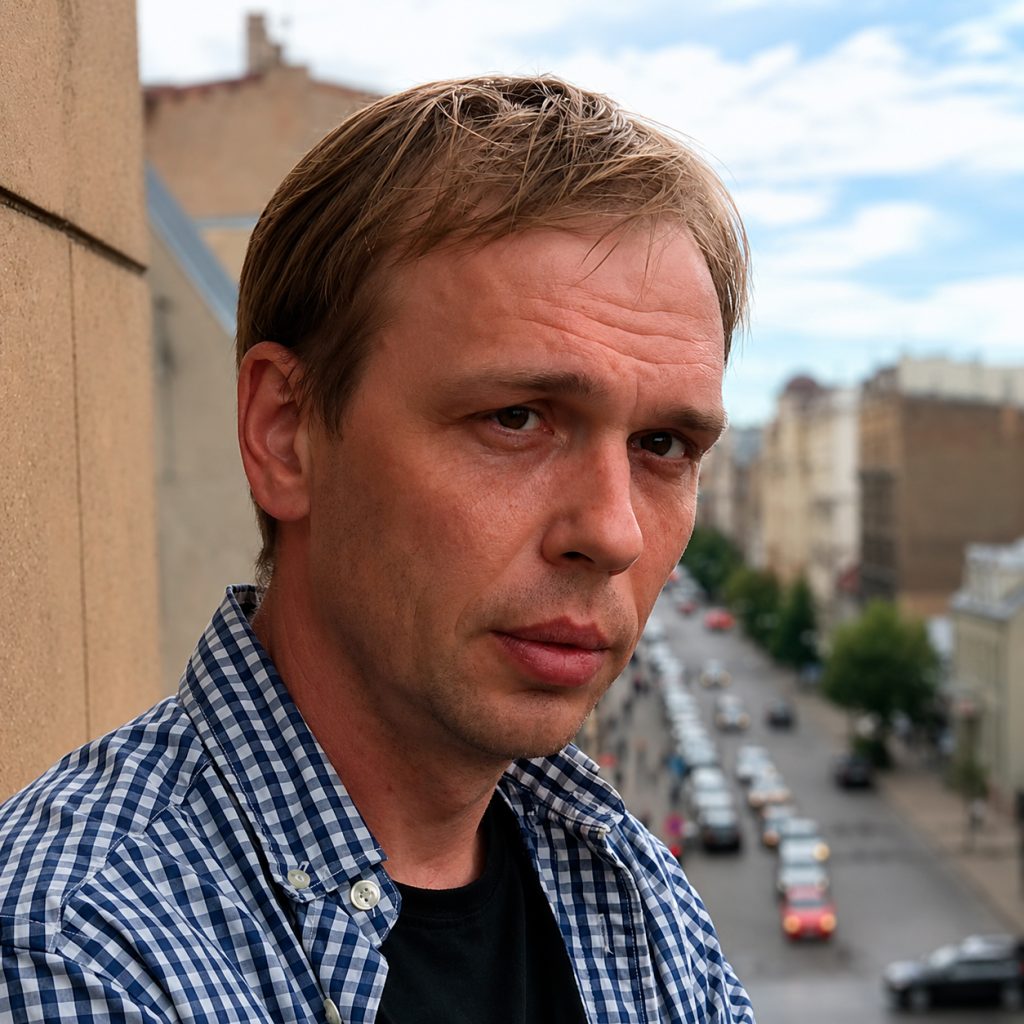
A guaranteed list of burial services at the expense of the state exists — but municipal unitary enterprises are not aware of it. Then officials decided to introduce digitalization: from January 1, 2025, you can get a QR code for a free funeral at State Services. However, there was nothing to calculate the code with, and after the holidays it turned out to be broken. Now they print it out on paper and take it to social services. The pilot Kaluga reported on the organization of burials via the Internet — but local funeral workers heard about it for the first time. After checking with the archives, Sergei Yesenin’s grave was declared illegal. About what the digital transformation of the funeral business looks like in Russia — in an interview with the founder of the Funeral Trust channel and concerned citizen Ivan Golunov.
Ivan Golunov founder of the «Funeral Trust» channel
Cemetery Inventory
The National Plan for the Development of Competition in the Russian Federation until 2025, approved by Government Order No. 2424-r of 2021, set corresponding goals. The most important of these was the task of taking inventory of cemeteries and burial sites, maintaining their registers and posting them on regional government service portals. The task was not completed by the deadline.
Andrey Statov, founder of the Unified Environment and My Roots services, emphasizes the central role of inventory in large-scale changes aimed at whitening the industry. In his opinion, this is the first and mandatory step, without which further development is impossible. He notes that inventorying the existing burial site is an expensive process that has been going on for 5–7 years, but with varying success.
«It is necessary to digitize nominal source data in order to conduct an inventory of existing burials. This will allow making informed decisions about the preservation of gravestones and interaction with relatives, while it is important that all participants in the process are informed,» the specialist emphasizes.
Andrey Statov is confident: digitization and inventory of cemeteries will open the way to the creation of virtual memory. This solves two key problems: it helps in finding roots and frees up space for new burials. The world is moving in this direction.
«When everything is taken into account and transparent, it is more difficult to manipulate the sale of the best places, for example, at the main entrance,» notes Ivan Golunov. «It’s easier to work with places without records. Digitization makes it impossible for a grave to disappear and a new one to appear in its place. Recognizing a grave as ownerless is a long and complicated procedure, but without records it’s much easier to do.»
«There has not yet been a systematic and high-quality approach to this issue,» explains the expert. «There have been separate attempts, and many contractors offer services for digitizing cemeteries, but there is no uniform standard. Each municipality acts in its own way, and how this data will be combined into a common database is unknown. Previously, inventory from drones was popular in the regions. It made it possible to determine the size and number of graves, but did not provide information about those buried. Cheap inventory is like that.»
Deputy Minister of Digital Development of the Kaluga Region Vladimir Sorokin noted that, despite the status of a pilot region, a complete inventory of burial sites in Kaluga has not yet been completed. Specialists still have to manually mark burial sites in cemeteries, which creates inconvenience for citizens. Sorokin expressed hope that the Ministry of Digital Development of the Russian Federation will develop accessible tools for the regions to solve this problem, especially for municipalities.
According to Anna Taruntaeva, a specialist at the Kaluga City Management Department, there are 24 cemeteries in the region with a total area of about 200 hectares. Most of them do not have sufficient archival data for a complete inventory. Only two city cemeteries have gone through this process completely.
«We expect from the Ministry of Digital Development not just requirements for data formats, but a ready-made tool that will significantly simplify our work,» Deputy Minister Sorokin emphasized.
However, this expectation contrasts with the position of the Ministry of Digital Development of the Russian Federation. At a meeting in March, where four services of the new platform were presented and regions were invited to participate in piloting, a representative of the ministry said that there were no plans to provide a tool for digitizing existing burial sites due to lack of budget. The Ministry of Digital Development of the Russian Federation did not respond to the publication’s request.
The inventory of cemeteries in Russia is carried out in a patchwork manner, and the case of the village of Poikovsky in the Khanty-Mansi Autonomous Okrug is the exception rather than the rule. They completed this work there by the end of 2025 and are now testing the Unified Environment platform. This system is actually an electronic book of burials containing information about the number and location of graves.
«A proper inventory should include several levels: survey of the territory, photographic recording, determination of geodata, entering information from tombstones and subsequent reconciliation with funeral books, accounting logs, archival documents and registry records,» describes Svetlana Yurkevich from UNAR.
In the Tyumen region, according to the housing and communal services department, about 60% of cemeteries have been inventoried. The main obstacles are the lengthy process of re-registration of federal land for cemeteries (forest and agricultural land) and the lack of funds from municipalities. Each new burial registered through the platform automatically updates the electronic registry. The data is stored in the federal system FSIS PGS, integrated with EPGU.
The Tyumen region claims that it has successfully transferred the data accumulated in the regional geographic information system «Accounting for burial sites» to the FSIS PGS. This became possible thanks to the connection to the federal platform «Burial Management», which made it possible to create a cartographic basis for accounting.
We expect from the Ministry of Digital Development not requirements, but a ready-made solution.
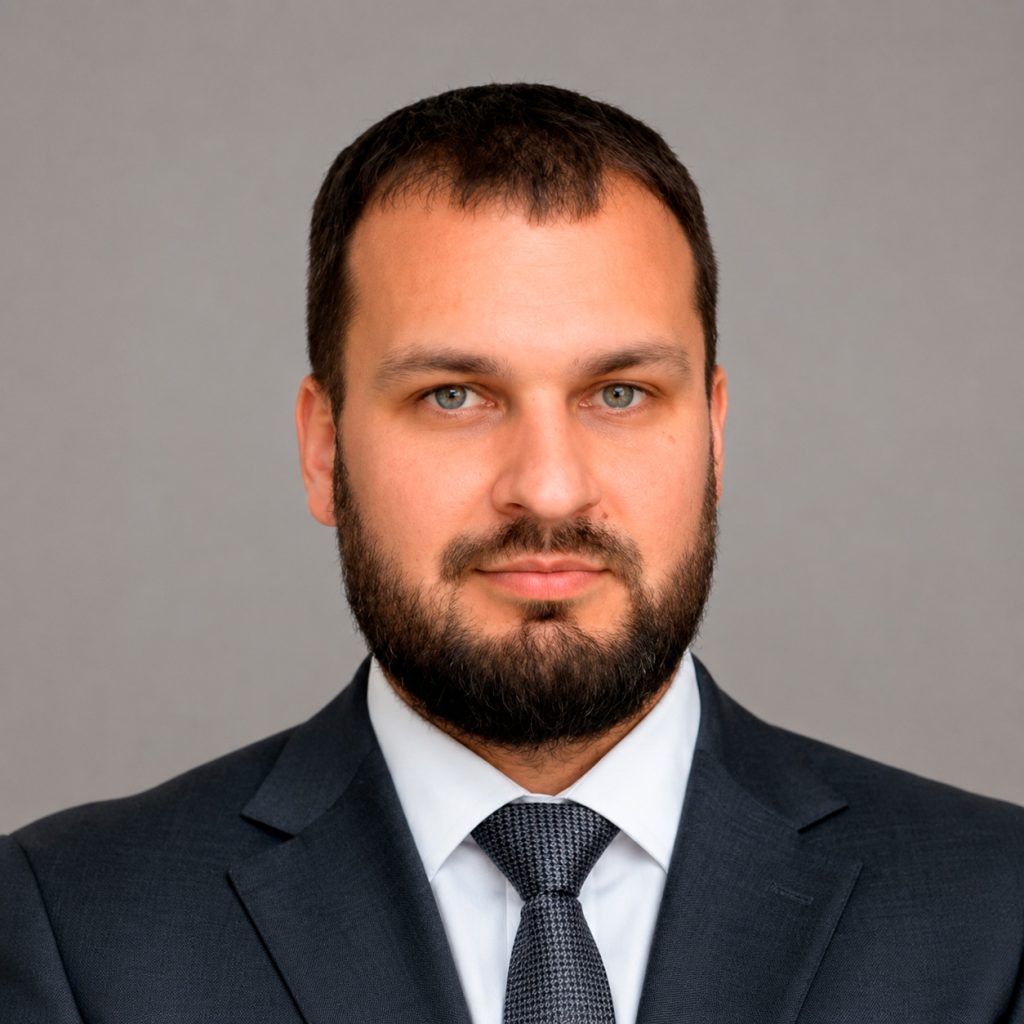
The Kaluga region became the first pilot where services related to the loss of a loved one began to be transferred into electronic form. Deputy Minister of Digital Development of the Kaluga Region Vladimir Sorokin spoke about how many applications have already been processed online, why cemeteries are not yet visible on the map down to the burial, and when funeral companies will be required to disclose prices.
Vladimir Sorokin Deputy Minister of Digital Development of the Kaluga Region
Happy «vision» for the «Single Operator»
The Kaluga company «Unified Operator», which defended, in its words, the «vision» of industry needs, developed a standard solution for burial management and marketplace, which received the approval of the Ministry of Digital Development, is demonstrating sharp financial growth. In 2022, the company’s revenue amounted to only 228 thousand rubles with a loss of 8 thousand rubles. In 2023, despite growing interest in the project, the loss increased to 538 thousand rubles. The situation changed in 2024: amid experiments to reduce the cost of regional GIS and re-protection of Vision, the company’s profits began to grow rapidly. By 2025, it reached almost 75 million rubles with total revenue of more than 127 million rubles.
Co-owner of the company Ruslan Karpov explains this situation by the fact that it was created specifically for the implementation and development of a standard state product, even at a time when its creation was supervised by the Ministry of Construction of the Russian Federation, therefore, until funds were allocated for the project, the financial situation was unstable.
Financial success attracted new owners. According to the telegram channel «Funeral Trust», the company, initially founded in 2021 by the owner of the funeral company «Heaven» Ruslan Karpov and the deputy of the Kursk Regional Duma Andrei Lifintsev, received new participants in January 2024.
10% of the shares were acquired by Dmitry Levin, the main owner of the Donetsk City shopping center and the former head of East Main Capital JSC, associated with the structures of Viktor Medvedchuk. East Main Capital JSC itself owns another 20% of the Unified Operator. 22.5% of the company now belongs to Nikita Kuznetsov from Moscow, who headed the Unified Operator in August 2024. He is known online under the nickname «politruk ac».
Another major shareholder (25%) was 33-year-old Vasily Lyapokhov, an employee of the state bank. His father heads the federal «Central Scientific and Methodological Veterinary Laboratory» and previously headed the veterinary service of Stavropol.
Thus, according to the Funeral Trust, the new co-owners consolidated 78.5% of the shares of the Single Operator, which is implementing the Burial Management platform and electronic government services for allocating places in cemeteries.
Is VTsIOM preparing us for something?
At the end of May 2026, the VTsIOM analytical center presented survey results Russians about the funeral. The respondents answered questions about the funeral services market, the average bill and their awareness of the services. Given the origins of the think tank, one cannot help but think that the funeral industry is being prepared for possible changes — why else would one be interested in popular opinion? Perhaps in the near future we will witness attempts to take control of this market too.
In the meantime, here are the figures based on the results of the VTsIOM study. The funeral services market, the document says, can hardly be called typical. If during a normal purchase a person has time to study offers, compare prices, read reviews and even refuse or postpone the purchase, then in a funeral situation spending is necessary, but emotional shock creates high consumer vulnerability. Against this background, Russians’ ideas that the ritual market is built on profit, on someone else’s grief, and that prices are inflated, look expected. But it would be reckless to blame market participants: perhaps the low reputation is influenced by a lack of information about the procedure, mandatory costs and the real price range, the center’s analysts conclude.
The average estimate of the cost of a funeral, according to Russians, reaches 180,717 rubles, in large cities significantly exceeding 200 thousand (millions — 246,325 rubles, capital cities — 237,605 rubles).
The majority of Russians (71%) consider prices on the funeral services market to be unreasonably high and based on profit. According to a survey by VTsIOM, only 18% of respondents hold the opposite point of view, considering such expenses as a necessary payment for help in a difficult situation
«GosTech»: savings?
Creation and replication of standard AIS is impossible without GosTech. On the other hand, if these standard products for general use do not exist, GosTech will lose its significance. Dmitry Grigorenko, Deputy Prime Minister and Chief of Staff of the Russian Government, said at a meeting with digital transformation leaders that more than 25 regions have already successfully tested standard cloud solutions (TOP) on the single digital platform GosTech. According to him, using the platform reduces the time it takes to launch services by four times and does not require direct budgetary costs from the regions. One of the key advantages of GosTech, which can be called a utility platform, is the reduction of costs for digitalization of government agencies.
But will they ever be able to openly and accurately count all the resources consumed and consumed by GosTech, GisTech and contracting companies? What is the real quality of the services provided and how much does it exceed the capabilities of regional teams, once called «digital special forces», which are now not trusted with either money or development?
Does the state admit that federal governance of digitalization has effectively failed? It has been repeatedly noted that municipalities remain uncontrolled, and regions act separately. The question arises: how else did the federal authorities imagine this process? As a result, it was decided that the federal center would be able to carry out digital transformation more effectively. The unitary and hierarchical management model, where integration had proven ineffective for many years, was recognized as the only possible one. The «one-stop-shop» approach has become the basis of «business administration mastery» for taming decentralized, sprawling architecture.
Whether it will be cheaper is a rhetorical question. It is unlikely that there will be respondents who will answer this question in the affirmative. And how do they know?
The concept in question echoes the topic covered by Foreign Intelligence Colonel Andrei Bezrukov. At SPIEF, he said that the vertical decision-making system is ineffective and unstable. According to him, such a system is not capable of making adequate decisions and is vulnerable to external influences due to its bulkiness and concentration of control at one point.
This conclusion also applies to the concept of strengthening the digital transformation vertical. Time will tell how correct this course will be.
How else can such discrepancies in numbers be explained? In 2026, 38 state information systems should operate on the GosTech platform. However, back in 2023, Prime Minister Mikhail Mishustin announced the priority transfer of 150 socially significant GIS, planning to complete this process by 2024. And in 2022, Dmitry Grigorenko’s predecessor, Dmitry Chernyshenko, talked about 500 inventory systems and 150 priority ones. So what is better: «in one hand» or «a good mind, but two are better»? This is a dilemma.
Services implemented within the framework of the federal project «State for the People», related to the preparation of documents upon the death of a loved one.
submitting applications for a burial place, re-registration of burials for other persons, obtaining permission for reburial: https://www.gosuslugi.ru/626524/1/form
Like everyone else, we use strictly necessary cookies to run the site and to understand which materials are read. See our Cookie Policy and Privacy Policy.